jiggity jog

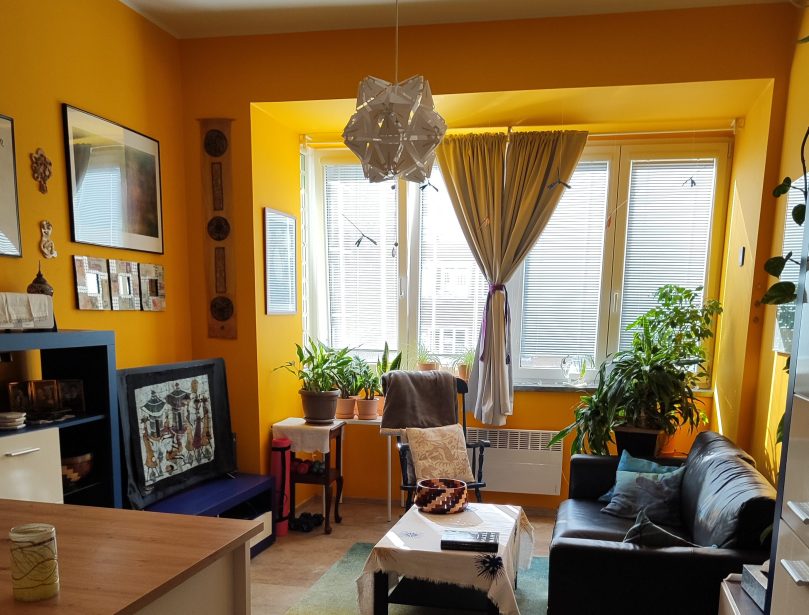
Being home is good. I read an article, doubtless sponsored by a travel agency, that said that travel was like therapy in that you get to see that the way you are currently living your life is not the only way, and you return from travel ready to try applying some of those different ways. Probably not a travel agency, do those even exist anymore. An airline maybe. But it’s true. I came home after two months away from home ready to be a new and improved version of myself, not so much because I’d seen a different way of doing things, although I had. I’d seen many. More like because I saw that I could adapt to many different ways of being Anne, Anne who visits different lives, and Why Not try adapting to being a better version of myself, given that I am adaptable. I came home, got over jet lag by saying I didn’t have time for it (the health monitor says I owe eight hours of sleep, I assume I owe it to myself, which is pretty much what I lost, so… yay). Overdoses of melatonin. Magnesium, benadryl, xanax. I think it’s funny how much we complain about “daylight saving time” and then I voluntarily do it to myself nine times at once, four times a year now. Anyway I came home and immediately sprang forward into life, which was made quite easy by the fact that the weather was very spring-like, blue skies and sunshine and whatnot.

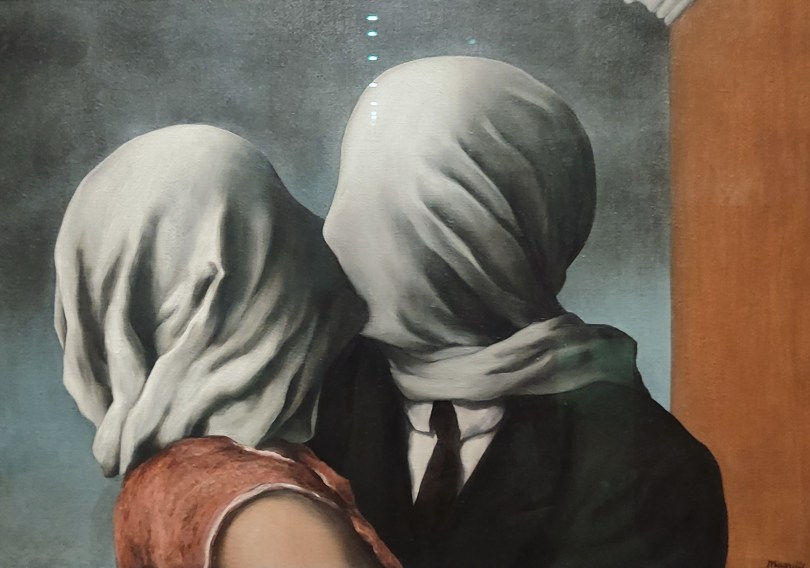
What I feel aware of recently is this veil, this membrane, between who I am and who I want to be. It’s so thin, I can see me through it, and I imagine I’m happier, healthier. It’s such a small jump. I can’t do it. I can do it; I don’t. I stay in bed too long, I look at my phone, I think about things and don’t write them down and they float away like soap bubbles, as if I hadn’t thought them at all. I make lists and don’t refer back to them. There’s something lost on the follow. I want to be better but not enough to do it.

I make a massive grocery order to restock my tiny kitchen with the staples I’d cleared out before I left. I buy the ingredients to eat a healthy cholesterol-lowering breakfast: nuts, fruit, oatmeal, real maple syrup to make it fun. I look firmly at the ingredients while I fry the same egg I have had for breakfast every day for twenty years. I prep cook a healthy lunch for four days and figure that’s worth something. I count my rosary of the twenty-three people I’m pretty sure love me. I double some names because I’m quite sure of them. I bet they’d love me even more if I was better. Were better. Kinder, more attentive, more reading of paper and less of electronics. It has occured to me that I never count myself on that list. Oh but this is quite maudlin.

I am glad to be home. Glad for sunlight. Glad for the little neighbor who said “Hello” to me today when we passed on the street. Glad for a man I haven’t seen in 12 years and we high fived each other as we walked past, which is the same thing we did 12 years ago. Glad for grocery delivery, both real and aspirational. I’m glad to come home to my books and my bed and my plans large and small.
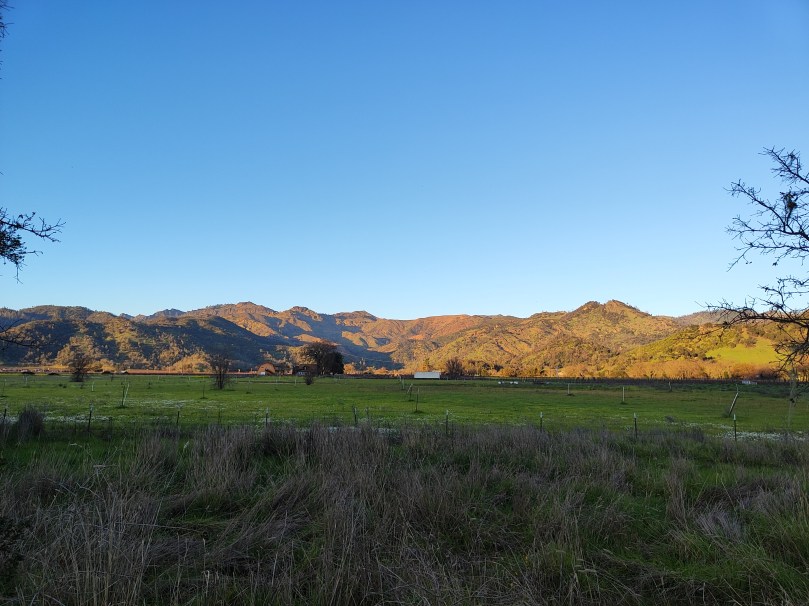
calistoga

In the morning they bring coffee and cake to the door. We drink the coffee with milk and sit in separate rooms and solve puzzles until we feel social, well I feel social but I practice being patient and write this instead. As Herman Hesse wrote, “I can think, I can wait, I can fast.” I eat the cake, though.

Then we go out into the world where I have to do the dance in my head of staying quiet or telling my origin story over and over again because for some people how I got where I am is the most interesting thing about me. It is not the most interesting thing about me but it is the answer to the question they always ask. My sister is patient as I answer it again.

We drink wine and talk about minerals and fruit, soil and stones, and where to go next. We try to make good small talk. Someone has a Tesla in the parking lot and I’ll admit I want to leave. I’m not very good at withholding judgment. Later we buy books at a small bookstore until I feel rebalanced.

Some people seem like zombies. Some people seem to be listening to someone screaming all the time, worry strobing across their face. Some people seem completely normal. 

In the afternoon the sun is warm and we swim in mineral water until our fingers turn to raisins. The bites on my legs are healing, bonus. My shoulder isn’t better but it isn’t worse and I practice moving it under water, weightless. I don’t know how we are supposed to be. All empires fall. In Athens thousands of years ago someone was pressing olives, someone made a wall carving, and Aristophanes wrote comedies, as the golden age ended.

more postcards


This is a story I am telling for someone else and it’s about someone else but I’ll probably creep in, being me. In this story, the person who commissioned the tale (sometimes called the “patron”) – the patron saint – has a thing that they do obsessively. If it were bad we would call it an addiction but it is not bad so we don’t. Every day, several times a day, sitting in a cafe or a museum or at a table while waiting for other people to get their shit together (that’s me, sometimes called a “cameo”). Then we gather all the things together and take them to the next place. Sometimes other people partake, me (again) consistently, but also lately a friend in Antarctica which makes for interesting images. I don’t know why I’m being coy. My traveling companion is an artist and a relentless correspondent who makes and writes postcards, and when we travel together I also write postcards, which is fun. Then we go to the post office and try to mail them, which I submit is not fun but she thinks it is. She wanted me to write about one post office and the very nice postal worker who gave us peel-and-stick stamps and was very helpful in general but I am not a good commissioned artist, I am not compliant even when I like the orders so I will tell here instead how she tried to give stamps to another postcard addict and wound up crying because when you meet someone who loves things you love it can break your heart open a little in a very sweet way. Then we mailed 30 completed postcards (2 were mine) and went to a museum and bought more postcards and also some pretty paper and went to a cafe and wrote to people near and far that we are thinking of them, and then I wrote this, which is the pure and simple truth.

kataben

I was fascinated from probably age 12. I pictured a world of women with strong features, full lips, thick hair that tumbled in coils down flawlessly smooth backs. In university, one professor told me not to visit until I’d let go of the idea that it was fixed in time and I knew he was right so I didn’t try. I went to islands, seaside resorts, towns that disappeared in the off season. Blue roofs and white stucco walls, winding stone streets hostile to cars and flimsy shoes, the soundtrack to Zorba in every cafe, garlic and feta on every table, olives on the plates, in the oil and in the soap, every place a potential postcard and wish you were here. Sunrises or sunsets to assure me that life had gone on longer than I could imagine and would continue to. 

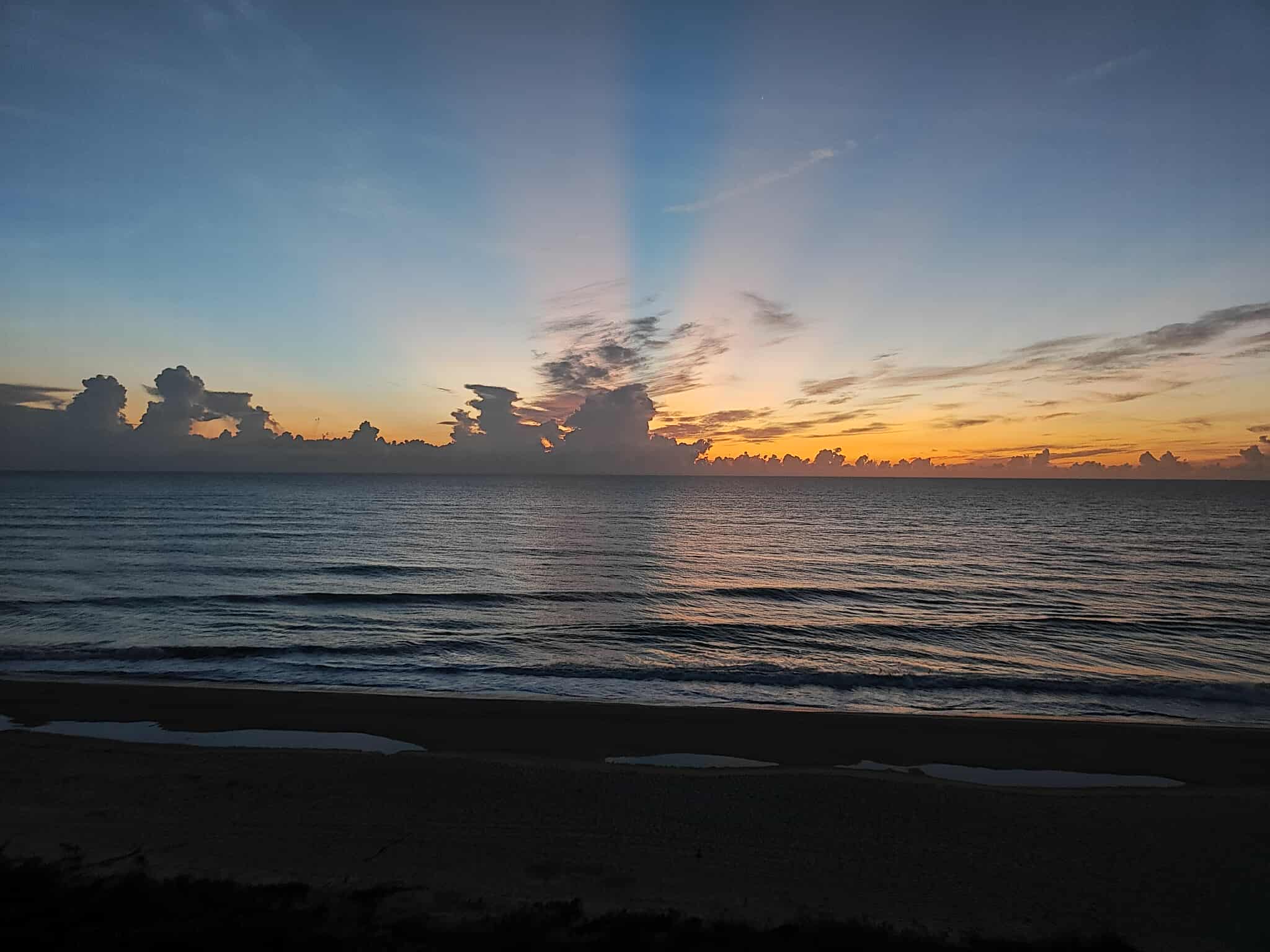
Now I’m finally circling the actual mountains, the remaining structures (faded but amazing for being there at all). We’re down at the sea now; we’ll be in the center next. I have no expectations of meeting any gods though I do think a lot about beauty and how it assumes different forms. The only English we hear is when we speak it. Every word is made of different letters that blur on the phone before taking shape as something I sometimes recognize. The rooftops are bars or solar panels, the streets have sidewalks except when they don’t, and the music everywhere is a recorded version of a song I know but as if played by a band in a second-rate hotel. The sunrise still renders the clouds pink and purple as bruises, bursts through and blinds us.

We wash our clothes in the sink, walk single file past indifferent cats and walls crumbling or covered with graffiti or both, talk about aging and friendship and authenticity, eat garlic and feta and olives. I am not forgetting the rest of the world, which does not let you forget, but I am, in these moments, happy. 

obrigado

The feeling of not belonging is particularly keen for a single person during the holidays, when one being uninvited feels unwanted and even unwelcome. And the same one, if invited, feels it as a courtesy, a kindness, pity for the stray cat. It’s odd that the times when I had family and invited similar strays I felt like I’d won some marvelous extra but I don’t usually feel like a marvelous extra now that the tables have turned, barking my knees on the edge of a limited space that comfortably fits one less me. The feeling that you should earn your keep, sing for your supper, or at least put forth fresh daily conversation topics. Blush with shame later when the person who invited you inevitably says something about how they don’t usually do things the way you just did them. We don’t usually eat that with our fingers. We don’t usually drink so much. Worse: we don’t usually feel like we need to keep the conversation going for no reason. 

The story you told yourself before you left is the same one you tell yourself every morning and evening. Be gracious. Be kind. Compliment everyone at least once every day. Everywhere is interesting so anywhere is good. Be flexible. Be a leaf on the wind, a twig in the river, go with the flow. 

There is a sea, for which you are grateful, and the tide rolls in and out every day. There is a sun and you raise your face to its warmth and track it across the sky as it rises and sets. We find it beautiful, we imagine Sisyphus happy, and at the end of one city we put everything back into the suitcase and roll to the next place.

bird brain

In the winter I get very sad; it is a seasonal sad, I think, but it always feels like it’s going to be forever. I’ve been solving this by getting out of town, since part of it is certainly the darkness, the sun that comes up briefly and barely, and by being with people who I’m sure love me, since part of it is the feeling that nobody does. A motivation for moving to my wee perfect apartment was making it possible for me to do this for at least 2 winter months: pack it up, pack it in, turn everything off, and fly somewhere brighter. Birds do it after all and their brains are quite small so I should be able to.

I am sitting on my bed with a new black carry-on suitcase, which is what I’ll live out of for two months. I have a very good travel dress (black, wrinkle resistant) that I spent the last 2 hours looking for. Well I thought maybe I’d put it in the box with summer clothes so I hauled the box out and there was mold behind it so I cleaned that up and then moved a bunch of other things around in the closet to check behind them and then went through several boxes not finding the dress and then finally thought of where it might be (fallen to the bottom of the wardrobe) which is where it was. So now it’s in the suitcase and the suitcase is full and all the boxes are neatly packed away again. This felt much harder than it needed to and I was thinking maybe I shouldn’t go anywhere when it’s so difficult to just pack a suitcase but of course that’s just the winter brain wanting to select out of more and more until I’m too sad to even lift a finger.

Last night was closing night of the play. Wednesday we’re doing a comedy show and Thursday I leave. You’ve got this, I say out loud to the room, you can do this.

much muchness

Many things have happened and I am trying to figure out how to write about it, both in the internal way of expressing myself and in the more external way of trying to figure out the templates on a new blog site. It is not going well.

travel travails

Through the magic of the internet I’ve been watching people who are neurodivergent or “neurodivergent” (meaning they think they are but don’t have a diagnosis) and some of it has been interesting. One thing they talk about is masking vs. being authentic. I’m currently on an airplane and the little girl behind me has kicked the seat pretty relentlessly for 9 hours and grasped the back of my seat and pulled my hair in the process several times. I know she is a kid, I believe that plane travel is difficult for everyone and especially children, and I have empathy for the mother deciding that letting the kid make me uncomfortable (surely she knows) is a reasonable price to be seated next to someone who is not currently screaming. But this is how a lot of the “authentic self” talk feels to me: like permission to do what feels natural at the expense of making other people uncomfortable. And part of my response to that is irritation on two levels — first, that I don’t like having my seat kicked and second, that I regularly choose to sit with my own discomfort so as not to make others uncomfortable, and isn’t that the price of being among others? There’s a certain lack of empathy in this that I don’t like. That you can need to self soothe in ways that are obvious I guess I understand but once it’s disruptive to others… Maybe you don’t get to do those things, if you literally can’t do them without your comfort meaning someone else’s discomfort. 

I don’t mean discomfort like that when I’m in a museum and there’s someone in a corner sort of quietly rocking back and forth or “stimming” as the kids these days say, cause I understand art can be overwhelming and I think everyone should be able to explore that edge where the beauty of it is too much. 

But like, moaning loudly in a restaurant to the point that I can’t hear my dining companion is discomfort that I consider unacceptable. Restaurants are not a necessity. 7

Of course with airplanes it’s important to remember that the reason we’re all uncomfortable is a choice by corporate airlines to make people less comfortable by making seats closer together, thinner, etc. and I curse this compromise of our space in the same breath that I celebrate that we now have flights affordable enough that children can even be on the plane. I was once a parent conveying a child across an ocean and a continent and it ain’t cheap, I know. 

But I also wish that the way we acknowledge our own inconvenience could be expanded to consider the inconvenience of others. Like if the mother could at least point out to the child that she’s pulling my hair and that’s not nice? Could we all compromise our authenticity and even our own comfort a little, in the interest of continuing to occupy the same spaces? 

Part 2, coming later (maybe): nobody is impressed by how quickly you got the suitcase out of the overhead bin and stood in line, anxiety-masking weirdo. You don’t need to worry THAT much about other people. 

like pearls in a rosary

postcards

Beginning at about age thirteen I was a consistent writer of lengthy letters to people I missed. Part diary, part longing. If they wrote back (maybe half as often, if I was lucky) I would spread their letter out beside the next one I wrote, to make sure I addressed everything. I think of this writing now and I love how much I wanted to understand and be understood and I also think it must have been a little suffocating.

In my twenties, I kept a diary which cut down on the letter writing a little but not much. A fair bit of my diary from that time is about letters I've written for which I am awaiting responses, eagerly and sometimes angrily. Can you believe that I waited a minimum of a month for an answer, and can you imagine what that did to me if the month stretched to two months or more?

 
Conversely, the invention of email and the ability to immediately communicate to someone what was going on in my thoughts and my life cut back the diary quite a lot. Who was I writing that diary for? vs a letter and the potential interested audience, the possible provocation to interaction. Plus I had automatic copies of everything, so it was still a diary. But it made me a worse kind of crazy to write and wait for a response when it still took a month or months and whyyyyyy.
 
In my forties, I started blogging, and what I learned to do with this was disentangle myself from a response. Maybe someone who knew me would read it, or maybe not; maybe they'd write a response or maybe not. It was the purest writing I did, because it was not about feedback or publishing or a desk drawer. It was releasing a thought into the wild. 
 
Then social media arrived, and writing became about the response in a way that was worse for a lot of people than letter writing had been for me. Having survived the anguish of an unanswered letter, I think I enjoyed social media without letting it get too close to my heart. It still sucks what it's turned into and I mourn the updates from a range of friends.
 
HOWEVER in December at the unmitigated prompting of one textual apothecarian, I finally started writing postcards and: wow. Here's what a postcard is: it is a brief format writing (like a social media post or a short letter) without the expectation of response. You get a stack of stamps and you stick them on a stack of cards and then when you're waiting somewhere for something, you write a postcard instead of looking at reels or whatever, and then you send it and forget it. You can do that with diary entries, too. But as opposed to a diary, the primary message of a postcard is: thinking of you. A response to a postcard is not required or even expected; the format plus slow mailing times means your message is necessarily brief and complete in itself. 
 
I'm pretty good at seeing folks when I'm in their towns, but the world I have chosen is large and I'm always missing someone. This seems like a very mentally healthy way to address (literally) my longing, rather than amplifying it. Also a tiny act of rebellion against the powers that control other ways we connect.
 
I bought 100 postcards. Send me your address if you want one.