There’s a fascination with the helplessness I guess, and to some extent this feeling of power that comes with being able to help, to rescue, a whole being. Interesting too how it isn’t quite right to seize and exert power, how often the helping itself has to be framed from a place of helplessness. It followed me home. Well I couldn’t just leave it there. There’s some kind of grandstanding when you call it a rescue that is vaguely distasteful. Well we just fell in love at first sight is how you have to sell it, like you were equals somehow. For me, to the extent that I understand it, part of it is probably a kind of karma, a hope that if I were myself someday so helpless I would not be abandoned. Maybe also the feeling that if one is not able to help one is closer to needing help than one wishes. It’s a balance too because I have seen people who could not genuinely help rush forward with outstretched arms and then yell over their shoulders that they can’t do it alone. I have opinions about that. I have opinions about a lot of things. Also one does not want to be taken in. One does not want to see the beggar getting into a limo and riding off into the urban legend sunset. They have to need it and they have to deserve it. And what is need, what is deserve. Earlier this summer I sat in a home with birds, cats, humans, all saved from worse fates, and thought to myself that I am not such a sucker or more likely my heart is not so generous, the two sides of why I could never. I could never, but then nobody has asked me, no creature dropped on my doorstep or into my arms, nose softly pushed against the palm of my hand, and it occurs to me that if I have not rescued much perhaps I am the creature being rescued. Broken wing, tendency to be underfoot, odd smells, pitiful. Grateful mewling, licking the sugar from your plate.
I’ve been thinking about death a lot lately. Various reasons. I believe I have been thinking about death since I was 13. Or not really about death, not mostly, but about dying. Because I think I know how death will be, which is nothing, so that doesn’t interest me particularly. Whereas dying, boy howdy. Super interested in how people choose to leave. What they plan for and what they don’t. What they want. I used to have lists of things that I wanted to do before I died but now I have flexibility so I try to do things as they occur to me. The basic idea to live each day like it could be your last is generally solid although it doesn’t allow for much long term planning. Still good for getting things done. Often if I see dishes in the sink at night. a thought that’s been there for nearly 50 years flits across which is how Marilyn Monroe’s nail polish was chipped. Wash those dishes.
I don’t think about my funeral particularly much because I won’t be there to see it, and Jim Henson’s funeral directive* was perfect and anybody who can’t think of something better will know to default to that. I do think about having my affairs in order so nobody winds up so busy hunting down paperwork that they’re all stressed. I want people to be absolutely sad, devastated even, but not flummoxed.
*“It would be lovely if there were a song or two … and someone said some nice happy words about me.” also: nobody wears black.
Anyway lots of folks seem to be dying lately, not the sudden variety but the months ahead warning and the slow shut down of the body. I remember some 10 or 20 years ago I wanted to be a death doula, I wanted to pair up with my friend who’s a midwife and have a “cradle to grave” service. Clever, right? I think I’d be good at it because I’m good at explaining and I tend to have an enthusiasm for experience that can carry people along for a while. Isn’t it interesting how we all do this thing and we don’t really know much about it. More information easily available on how to pack for a trip abroad, or file your taxes, or make coffee. Etc.
During the early days of the AIDS crisis I was too young to be of much use. By the time it started to affect people I knew, I was working in another country. I feel like it affected me because when I came back a lot of people were gone but I did not in fact tend to bedsores, wash feet, hold hands. I think I would have, but I didn’t. When I was in my early 20s a friend of a friend was dying in the town where I lived, which was not where my friend lived. So I went to visit him in the hospital and watched him dying. We talked, we did extraordinary gallows humor, I brought him things if he asked for them. I don’t remember being sad. To be honest, I don’t remember when he died — did I visit with him 3 times or 13? But I remember thinking it was very human and very cool to be there with him, to be present with him. I wish I had done more.
I’m trying to say that my idea that I’d be a good escort through the last journey people take is not really borne out by my actual lived experience. Uh, I’m a pretty good travel companion for other trips?
Then someone I knew and didn’t especially like died and that killed (sorry) the death doula idea. Because then I realized that most people are going to die the same way they lived. Whether they are self-centered or transcendentally kind or somewhere in between, it’s pretty much going to be the same way they were all the time. And looking at the whole death doula concept — much like midwifery, it’s going to be a lot of people who want to be in charge of how they do something when: first, their body already knows how to do it, and second, they cannot be in charge of this. People who have enough money that they believe they don’t have to listen to someone who contradicts their vision of their experience. And I don’t like people in general, and those sorts of people especially not.
I like to hope that when I am dying I will be gracious. I like to think I’ll tell everyone I love that I love them, and I’ll listen to them say what they need to say in the narrowing window of time. I like to think I’ll eat ice cream. I am trying to live that way. And to keep the sink clear and the dishes neatly arrayed in the cabinet, ready for use.
I was fascinated from probably age 12. I pictured a world of women with strong features, full lips, thick hair that tumbled in coils down flawlessly smooth backs. In university, one professor told me not to visit until I’d let go of the idea that it was fixed in time and I knew he was right so I didn’t try. I went to islands, seaside resorts, towns that disappeared in the off season. Blue roofs and white stucco walls, winding stone streets hostile to cars and flimsy shoes, the soundtrack to Zorba in every cafe, garlic and feta on every table, olives on the plates, in the oil and in the soap, every place a potential postcard and wish you were here. Sunrises or sunsets to assure me that life had gone on longer than I could imagine and would continue to.
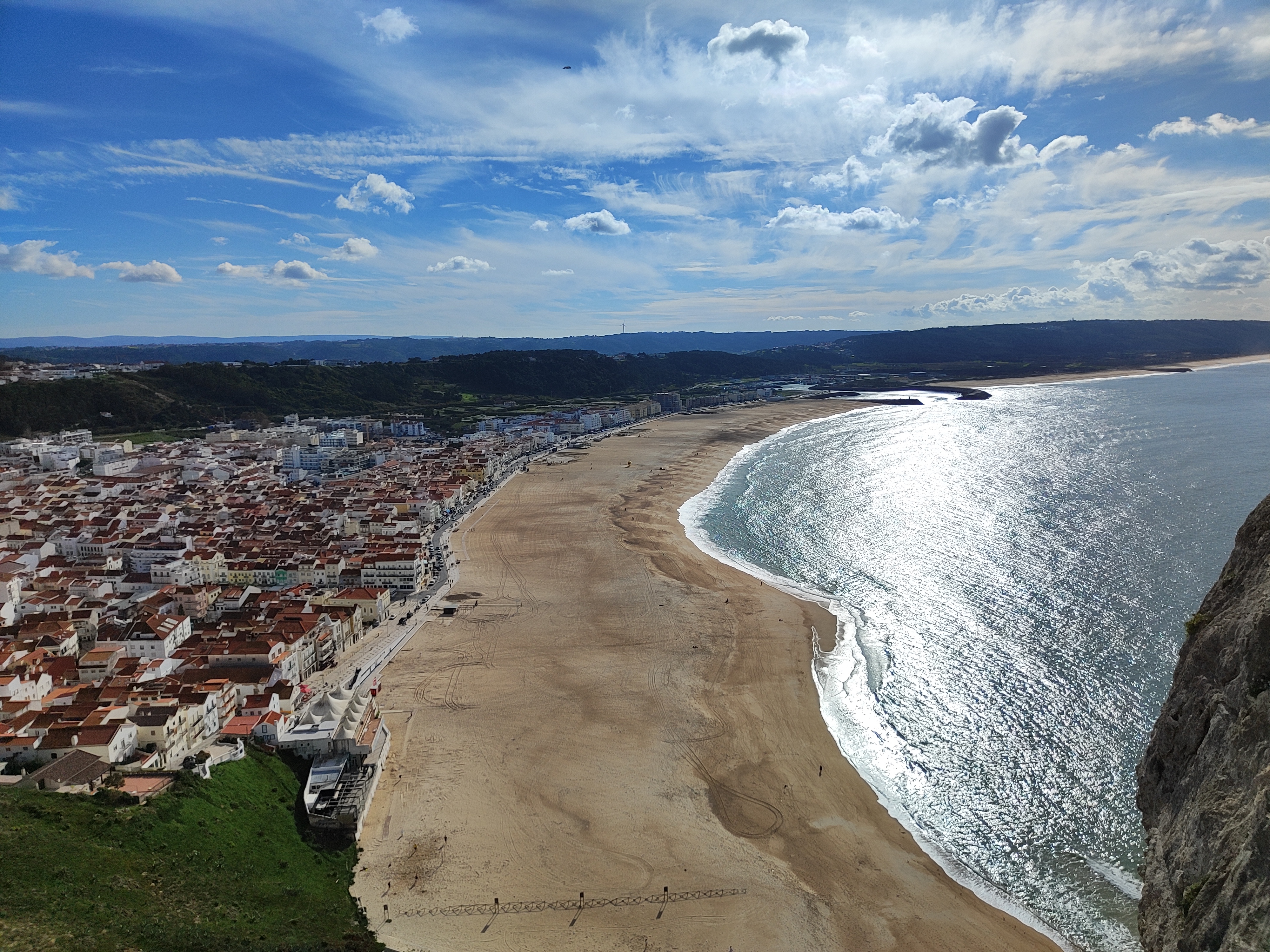
Now I’m finally circling the actual mountains, the remaining structures (faded but amazing for being there at all). We’re down at the sea now; we’ll be in the center next. I have no expectations of meeting any gods though I do think a lot about beauty and how it assumes different forms. The only English we hear is when we speak it. Every word is made of different letters that blur on the phone before taking shape as something I sometimes recognize. The rooftops are bars or solar panels, the streets have sidewalks except when they don’t, and the music everywhere is a recorded version of a song I know but as if played by a band in a second-rate hotel. The sunrise still renders the clouds pink and purple as bruises, bursts through and blinds us.
We wash our clothes in the sink, walk single file past indifferent cats and walls crumbling or covered with graffiti or both, talk about aging and friendship and authenticity, eat garlic and feta and olives. I am not forgetting the rest of the world, which does not let you forget, but I am, in these moments, happy.
The feeling of not belonging is particularly keen for a single person during the holidays, when one being uninvited feels unwanted and even unwelcome. And the same one, if invited, feels it as a courtesy, a kindness, pity for the stray cat. It’s odd that the times when I had family and invited similar strays I felt like I’d won some marvelous extra but I don’t usually feel like a marvelous extra now that the tables have turned, barking my knees on the edge of a limited space that comfortably fits one less me. The feeling that you should earn your keep, sing for your supper, or at least put forth fresh daily conversation topics. Blush with shame later when the person who invited you inevitably says something about how they don’t usually do things the way you just did them. We don’t usually eat that with our fingers. We don’t usually drink so much. Worse: we don’t usually feel like we need to keep the conversation going for no reason.
The story you told yourself before you left is the same one you tell yourself every morning and evening. Be gracious. Be kind. Compliment everyone at least once every day. Everywhere is interesting so anywhere is good. Be flexible. Be a leaf on the wind, a twig in the river, go with the flow.
There is a sea, for which you are grateful, and the tide rolls in and out every day. There is a sun and you raise your face to its warmth and track it across the sky as it rises and sets. We find it beautiful, we imagine Sisyphus happy, and at the end of one city we put everything back into the suitcase and roll to the next place.
One day there was a woman reading on one of the back balconies, the one with the most plants, a cat in her lap. We nodded hello but that was it. I imagined myself similarly positioned. Could I grow that many plants? Do I want a cat? Some months later, there was a woman, I think the same woman, in front of the same building with a suitcase and a cat carrier. Maybe going on holiday? She was waiting for a taxi and seemed perhaps a little impatient but waiting for taxis often looks like this. A day or two later, the front windows of the apartment that align with that back balcony, assuming their apartment layout is the same as mine, were open, and music blasting out. Maybe she doesn't like this music, and the chance to blast it is in her absence. Maybe the cat doesn't like it, and now that the cat's away, the mice can listen to yacht rock with impunity. There's a mouse party, tiny mouse cocktails. I don't even make this happen, my brain does this for me. More likely there are two humans living in the apartment and one has gone out and the other is listening to music and that's all, though I'm sad to let my tiny mouse swizzle sticks go. Later I'm taking the stairs and I hear a door slam and think: fight. no, wind. or possibly excitement. There was a woman outside ringing a doorbell when I got there and she entered the stairwell behind me and now she's not there, so she's gone into some apartment below mine, which could be the one with the most plants and the yacht rock. I'm stringing together whole narratives. I haven't seen the cat lady on the balcony lately. Has she moved out? The plants, which I had presumed were hers, are still there. But some people walk away from plants when they're walking away from other things that are harder to leave, so that's no evidence of a planned return. Could be anything. Maybe you are thinking the same story I am. Jimmy Stewart, confined to a wheelchair, has nothing on me and my imagination, though I haven't started thinking about murder yet. I caught myself standing under the window to see what music, if any, would drift out. It's the same but not as loud which could mean less emotion or could mean nothing. I like yacht rock for cleaning, myself, though I have been trying to set spotify to the top hits of the week so I know what the kids these days are listening to; someone walking under the window could think I was enjoying brat summer but in fact I am, like with most of my life, sitting beside the action and watching it with curiosity and a gift for amusing myself by making up stories that are probably certainly not true or they might be.
It is unfair how much of the work that we have to do in order to be fully human is necessarily devoted to overcoming false narratives. This sentence came to me fully formed while standing in a very long line and then I had to hope I'd remember what I was thinking about and how clearly I was thinking it if and when I was able to write it down. I am so easily distracted. It was probably better before. And I'm pretty sure now it's not an original thought. Letting go of the idea of The One after having been told it's true for years is an example of this, though that wasn't such a struggle for me. But I am of the age that was taught by books and films and television that almost every villain could be redeemed if you just practiced sufficient patience with them (and maybe sent them a ghost or two but mainly that you personally had to be patient and forgiving). This patience and forgiveness was not to be extended when they were sorry because they didn't have to be sorry and it wasn't based on them trying to do better and then you forgiving them because often your forgiveness had to come first, the first step in their redemption was yours. We set up generations of people to believe that "sensing the good in them" was enough. I was talking to a friend who said that she views people on the basis of what they do and she is thus less likely to be surprised when they act how they are. In that conversation, I said I view people on the basis of what they say they are, but even that's not quite true. In honesty, I think I often view people on the basis of the good I think ("sense") they're capable of, and then I'm always knocked flat when they don't do what I expect. But that's the mythology I grew up with. It's not a new thought even to me but apparently it's time for this seat on the ferris wheel of my recurring thoughts to have its moment of a clear view: today's a reminder that redemption arcs are considerably thinner on the ground in real life than they are in Hugo, Dickens, Lucas, etc. It's unfair that I've gone about forming my current view of myself as a "good person" in part because I make myself see the good in people even while their knife is hilt deep in me. I have found myself fighting back the urge (sometimes unsuccessfully) to justify for them how much they hurt me, as if I could somehow empathize them into good behavior. It's unfair because I don't actually think it's "good" of me and certainly hasn't been "good" for me, and yet part of my recent life has had to be devoted to tearing myself away from a dream narrative I was fed and consumed dutifully. I swallowed it whole. I'll see the good in them and then they'll be that good. Delicious! I do still want to be good and kind and empathize. I just don't feel like I can or should give people the unearned benefit of that anymore. It's so hard. You who already know this truth don't get why I'm struggling but take my word for it, it's a bitter pill. But if I'm going to live another five years, and those five years wouldn't involve this pain, feeling betrayed by my faith in people who usually never asked for it, it would be sweeter. Ten years twice as sweet. Maybe that sweetness would be worth more to me than pretending to myself that I'm good. Probably worth a try.
It is unlikely that anything will sting the way once, when you were so much younger, your friend sat down with you to confess that his feelings had shifted and what he had thought was a bit of fun while verbally sparring was actually an attraction and he had to acknowledge it, it wasn't worth pretending he didn't feel what he felt. He'd maybe never felt this way, so absolutely physically attracted to someone he felt intellectually matched with, and emotionally too. He needed to tell you about his feelings. And you in the blush of that moment realizing that you too had feelings, that the only reason you hadn't acknowledged them to anyone including yourself was that it seemed so certain they'd be not just unrequited but ridiculous, like falling in love with the moon. But what if the moon said he loved you, what if the moon said it first? Your heart rushing to the surface of your face. "Everyone will be so surprised," you said. "Even I'm surprised!" And he said, "So… She hasn't told you?" And you realized that ahhhhhhh this another story where the only part that is about you is how well you listen; what a good listener you are. You spent the rest of the night drinking and laughing about his newfound love.
That wasn't the first and not the last time that you have realized in the middle of a story that it wasn't about you. Nobody else's story is about you; everyone is the hero of his own story. Everyone is their own main character, this makes perfect sense. And sometimes you're not a character in their story at all. No reason for it to sting, though it almost always does, the sting of salt in the eyes and you blink it away.
And now you are more than halfway through life, the sunset years, rich with purple and gold and you want for nothing, happy to be a tertiary character in every story other than your own, swelling a progress or starting a scene or two, so to speak. It's fine. But the other day when you found yourself written entirely out of a scene while someone looked you full in the face in a chapter you'd built and told you how much other people had done as though you weren't even part of it, and the salt rose in your eyes and you felt every relegation fresh, and followed it with a shot of self loathing for ever having thought, for ever having even imagined that anyone would give you top billing or any billing at all. Of course of course of course. It's never going to stop. Keep your eyes firmly on your own work. Blink it away.
I don't understand why we were told that curiosity killed a cat as if this were a reason not to be curious but a lot of people definitely aren't curious and it always seems weird to me. It's fun to know things. When I was younger, before the internet, I would call the library or go to the library to find things out. Flipping through card catalogs was fun. After the internet but before I could look things up on my phone I would write down questions that came up through the course of the evening and then send the answers in a next-morning email to whoever I'd been with when the questions arose. I thought it was a way of saying I'd been paying attention. I've been given to understand that not everyone finds this charming so I don't do it much anymore. But now that we all have libraries in our pockets, I'm regularly flummoxed by people who don't seem to actually care that there are answers to the questions they ask the air. And I'm even more perplexed when people lack curiosity not only about the world of facts but about the people they inhabit the world with. I am the sort of person who has forgotten things like birthdays since I started writing them down on paper, and I stand in awe of people who remember them (or most things like that) but more like baffled when people seem almost actively uninterested in a view of the world that is a different perspective. I have been in situations with people when I didn't want to hear their opinion because I thought it would change my view of them for the worse; this doesn't seem to be the case though. It doesn't seem like a fear of what truths are out there but an active lack of interest in any truth beyond the one they currently possess.
Maybe related: when people describe situations to me based on their understanding of those situations with no regard or interest as to what my view might be, even if those situations are ones I lived through and they did not.
To be curious about why people aren't curious is a Mobius strip that won't take me anywhere useful but at least I wrote it down, this moment of gazing, dumbfounded, at how little some people seem to want to know, even when it's right there. Even the cat got a good look.
This is a drawing of a rabbit. It's just a sketch and doesn't look very much like an actual rabbit; the ears are wrong and it lacks the endlessly curious bunny nose. I won't go on with rabbit details (soft fur, various endearing noises). I'm not stupid, it's not a real rabbit, it's a sketch of a rabbit, and just a rabbit head at that. What's making me personally unwell lately is that for some reason if I say "that's a rabbit" people feel a real burning need to tell me that it's not a rabbit, it's a sketch of a rabbit, or better yet that it's not a rabbit it's a duck. Yes, I see the duck, too. I'm well versed in optical illusions; wait til I tell you the story about that beautiful young woman in a fabulous hat who turned into a hag overnight. But right now for a minute I want to talk about the rabbit. I don't understand why before I get to talk about the rabbit I have to acknowledge all the different ways of seeing it. I know about those, too. I do! But there is something about the particular brand of my fear that is wrapped up with wanting to have the thing I see validated. Maybe it's not there, the creak of the house, the smell of gas, the cold draft from a crack somewhere, and I ask "Did you…?" because if you didn't then I am, finally, crazy. But I don't think I am. Yes, there's a duck there. But… Did you see a rabbit? It's all I want to know. Do you see the rabbit? Because I see it.
How long will you carry it, this weight? If the original idea was that it would hold you in place, it has done so, has pinned you not exactly on but so near the ground it's functionally the same. It is a form of stability that is closer to stagnation. What heights could you have reached? The birds you could have met, clouds you could have passed through, gossamer air, pale blue horizons within reach. For years I've watched you hover barely above the ground and waited to see when you'd cut yourself loose and where you might fly to. And the world has turned beneath you with you directly above it, fundamentally rooted to the spot. I thought you'd want to be free. Some days I blamed the ballast for holding you down, the dead weight, the burden you apparently believed had to be borne. Sometimes I blamed you for not releasing it. As long as you held it, your hands could touch nothing else, and I couldn't imagine why you didn't just let go. Your fear of the altitude you could reach, maybe. Was that it? Did the potential feel overwhelming? Or maybe, maybe, the fear that the weight isn't what holds you down at all. The fear that you were never meant for flight, could never soar, that your freed hands would remain empty and you'd have nothing to blame now. I believe you could have flown anywhere. Instead you held on, still hold on, your face sour as grapes beyond your reach, and the grass shrivels beneath your unmoving shadow.